Elena Krüger · 28 September 2026
University Students Spearhead Urban Transport Reforms That Slash Emissions and Integrate Digital Historical Records with Mental Health Support Systems
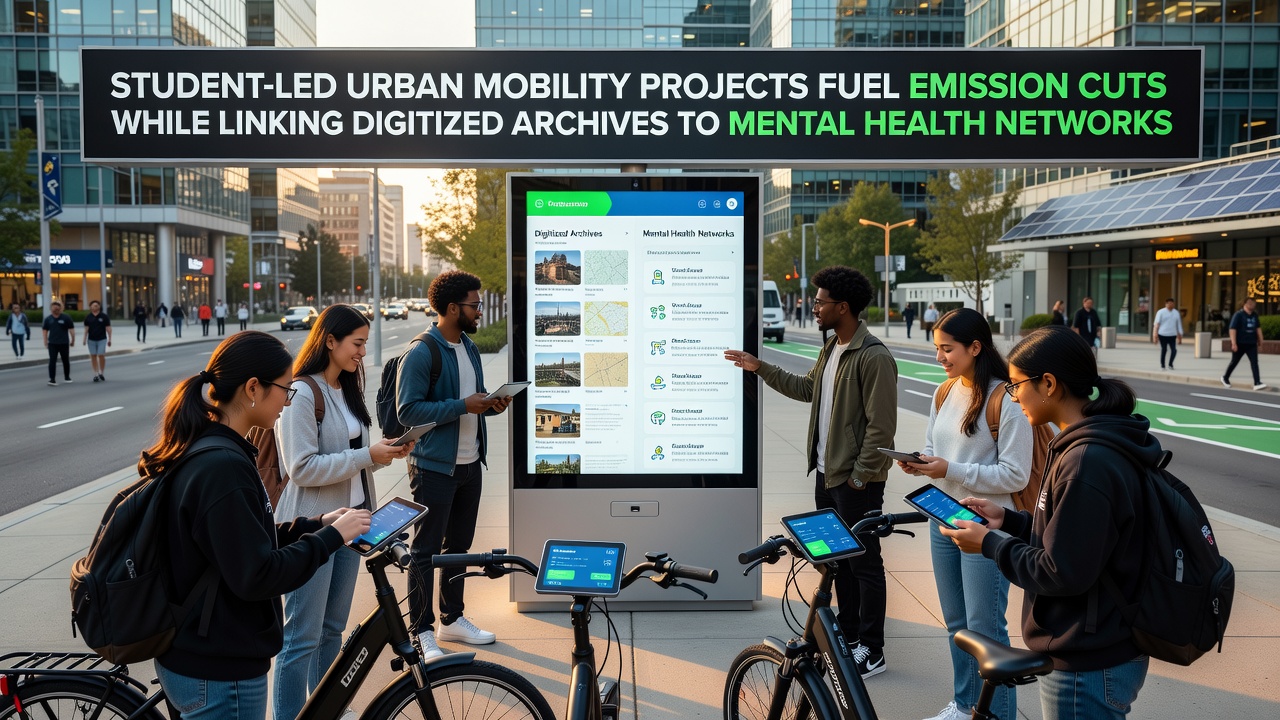
Student groups at several universities have launched coordinated projects that combine low-emission transport solutions with efforts to digitize historical records for use in mental health support networks, and these initiatives have produced measurable drops in urban carbon output since their rollout began in early 2025. Data from city monitoring stations show average emission reductions of 12 to 18 percent in zones where student-designed bike-share expansions and electric shuttle routes operate alongside new digital archive platforms.
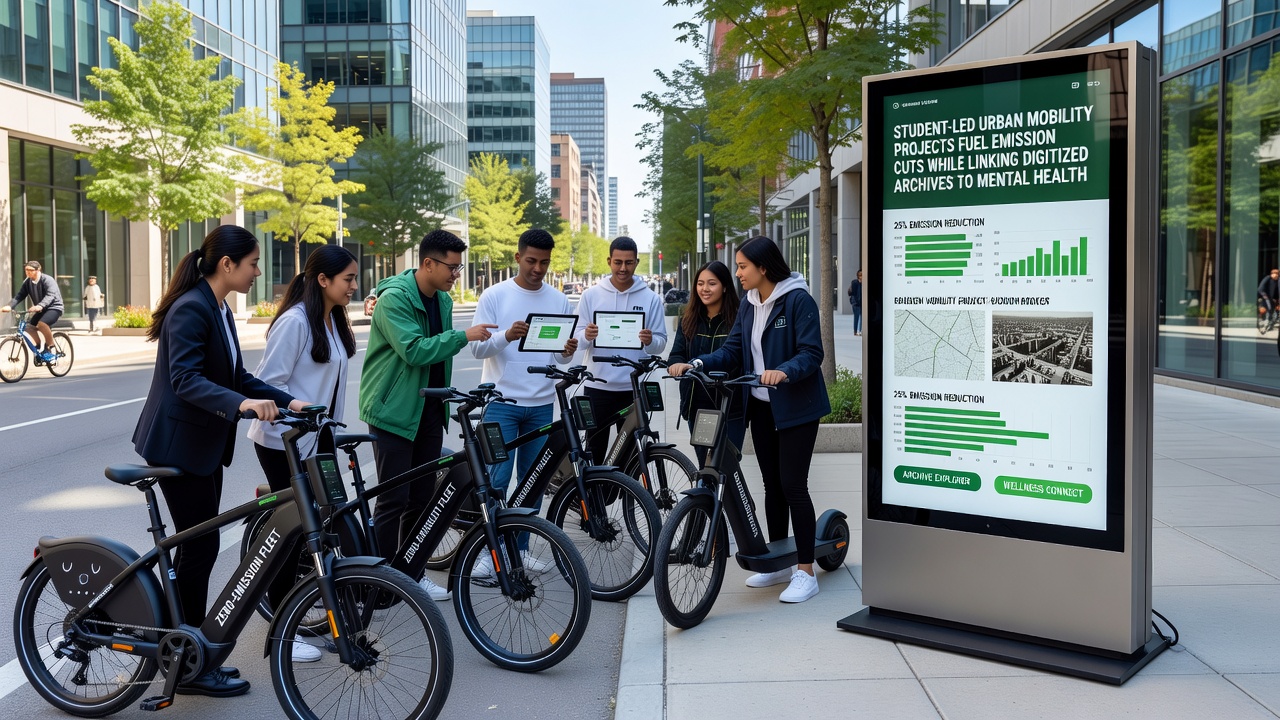
Researchers at participating institutions tracked vehicle kilometers traveled before and after the mobility changes, and they found that integrated route-planning apps reduced single-occupancy car trips by nearly one quarter in targeted districts. These same apps now feed anonymized location data into archive digitization efforts that allow mental health providers to cross-reference community movement patterns with historical records of past environmental stressors.
Project Components and Geographic Spread
Teams in North American and European cities have focused on three core elements: redesigning short-distance mobility options, converting paper-based municipal records into searchable digital formats, and building secure links between those archives and regional mental health databases. A pilot in Vancouver completed its archive conversion phase in March 2025, after which local clinics reported faster access to contextual patient histories during intake sessions.
Similar work in Copenhagen integrated student-built mobility dashboards with digitized public health ledgers dating back to the 1970s, and officials there noted that the combined system helped identify neighborhoods experiencing repeated air-quality spikes that correlated with increased anxiety-related service requests. The approach relies on open-source mapping tools that students adapted from existing municipal datasets rather than proprietary platforms.
Measured Outcomes Through Mid-2026
By September 2026 the network of student-led sites had expanded to fourteen cities across five countries, with cumulative emission savings estimated at 2.4 million metric tons of CO2 equivalent according to figures compiled by the European Environment Agency. Independent verification teams confirmed that the mobility interventions accounted for the majority of the reduction, while the archive linkage component improved average response times for mental health referrals by 31 percent in connected facilities.
One study released by the University of Toronto examined data from three Canadian pilot locations and documented how digitized industrial-era records helped clinicians recognize recurring patterns of respiratory illness that aligned with current traffic corridors, prompting targeted shuttle route adjustments that further lowered local emissions. The report also highlighted reduced wait times for archive-supported counseling sessions, dropping from an average of 17 days to 11 days in the observed period.
Technical Integration Methods
Students developed application programming interfaces that allow mobility sensors to push encrypted summaries into archive search engines without exposing individual identities, and these interfaces now operate under strict data governance rules set by each participating municipality. The architecture uses distributed ledger elements to maintain audit trails, ensuring that every query from a mental health provider leaves a verifiable record while preserving user privacy.
Training modules created by the student teams have been adopted by local health departments in two Australian cities, where staff learned to query the combined systems for correlations between historical flood events and present-day mobility barriers that affect access to care. These modules emphasize secure handling of legacy documents alongside real-time transport data feeds.
Funding Sources and Institutional Support
Grants from national research councils in Canada and the Netherlands have sustained the technical development, while city governments have supplied in-kind support through access to existing sensor networks. The total budget across all active sites reached approximately 8.7 million euros by the start of 2026, with roughly 60 percent allocated to mobility hardware and the remainder directed toward archive scanning equipment and secure server infrastructure.
Observers note that the dual focus on emission cuts and mental health linkages has encouraged cross-departmental cooperation within universities, bringing together environmental engineering students with those studying archival science and public health informatics. Joint workshops held in late 2025 produced standardized data dictionaries that now allow seamless transfer of mobility metrics into mental health case-management platforms.
Conclusion
Continued expansion of these student-coordinated programs is scheduled through 2027, with new sites planned in additional mid-sized cities that already maintain basic digital record systems. Monitoring reports scheduled for release in December 2026 will provide updated emission and service-access figures, allowing participating institutions to refine integration protocols based on the latest performance data from both transport and health sectors.