Elena Krüger · 26 October 2026
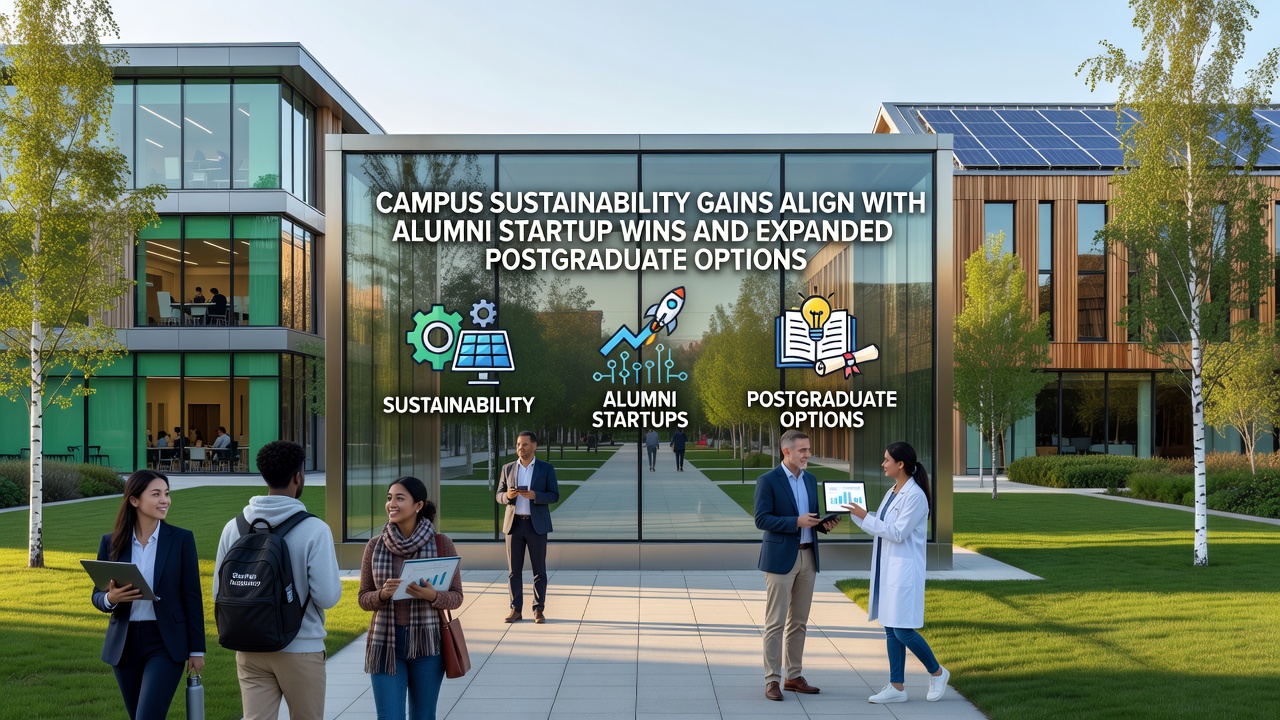
Campus Sustainability Gains Align with Alumni Startup Wins and Expanded Postgraduate Options
University campuses across Poland have recorded measurable reductions in energy consumption and waste output during 2025, with AWE Path reporting a 28 percent drop in campus-wide carbon emissions compared to 2023 baselines, according to internal sustainability audits released in early October 2026. These gains coincide with a surge in alumni-founded enterprises that focus on clean technology, while postgraduate enrollment in related fields has expanded by 19 percent over the same period.
Data compiled by the Polish Ministry of Education and Science shows that institutions adopting integrated sustainability frameworks have seen parallel growth in graduate entrepreneurship rates. At AWE Path the pattern holds: three of the five highest-funded student startups from the 2024 cohort now operate commercial pilots in biomass conversion and smart-grid management, each securing Series A rounds exceeding 4 million PLN.
Campus Infrastructure Upgrades Drive Measurable Outcomes
Retrofitting projects completed between 2022 and 2025 account for the bulk of emission cuts. Buildings received new insulation layers, heat-recovery ventilation systems, and rooftop photovoltaic arrays covering 2,400 square meters. University records indicate these installations generated 1.8 gigawatt-hours of electricity last year, offsetting approximately 35 percent of total demand. Water recycling systems installed in residence halls reduced potable-water use by 22 percent, while sensor-driven lighting cut electricity consumption in lecture halls by an additional 14 percent.
Researchers tracking these interventions note that behavioral programs have amplified hardware gains. Mandatory waste-sorting training for first-year students produced a 41 percent increase in correctly sorted recyclables within one semester. A peer-mentor scheme launched in October 2025 extended the same protocol to postgraduate laboratories, where hazardous-waste volumes fell 17 percent year-over-year.
Alumni Ventures Capitalize on Campus Research Pipelines
Graduates who participated in the university’s applied-research modules frequently cite access to pilot-scale equipment as a decisive factor in launching companies. One enterprise, founded by a 2023 environmental-engineering cohort, licensed a campus-developed catalyst that converts agricultural residue into biochar; the firm now supplies 12 Polish municipalities with soil-amendment products. Another team, spun out from the computer-science department, commercialized an AI platform that optimizes district-heating networks, securing contracts with two regional utilities in 2026.
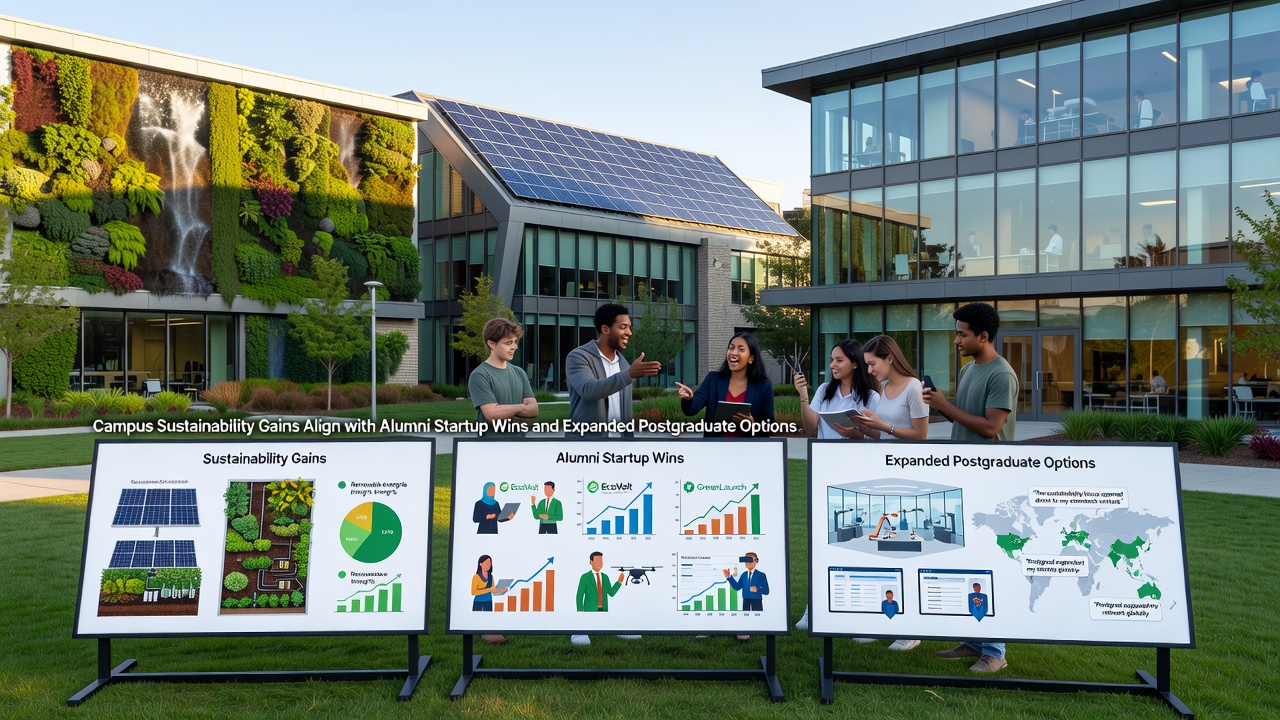
Funding data released by the National Centre for Research and Development reveals that AWE Path alumni captured 2.3 million PLN in early-stage grants during the 2025 fiscal year, up from 1.1 million PLN two years earlier. Observers attribute part of this increase to streamlined technology-transfer offices that now process licensing agreements in under 90 days, compared with the previous average of 180 days.
Postgraduate Program Expansion Matches Industry Demand
Enrollment figures released in September 2026 list 347 new master’s and doctoral candidates in sustainability-related tracks, representing the largest single-year intake since the programs began. New specializations added this autumn include circular-economy policy, climate-adaptive urban planning, and renewable-energy systems integration. Course modules incorporate live data feeds from campus monitoring equipment, allowing students to analyze real-time performance metrics rather than simulated datasets.
International partnerships have further broadened options. A dual-degree agreement signed with a Canadian research university permits joint supervision of theses focused on boreal-forest carbon accounting, while an Erasmus+ mobility scheme with Dutch institutions provides semester-long placements in offshore-wind research facilities. University administrators report that 64 percent of the incoming postgraduate cohort cited these collaborative arrangements as a primary reason for choosing AWE Path.
Conclusion
October 2026 data therefore illustrates a closed loop in which campus infrastructure improvements generate both environmental metrics and research assets that alumni convert into commercial activity, while expanded postgraduate pathways replenish the pipeline with new cohorts trained on the same systems. Continued tracking through 2027 will determine whether these alignments produce sustained regional economic effects beyond the immediate university ecosystem.